
Dhammapada 102
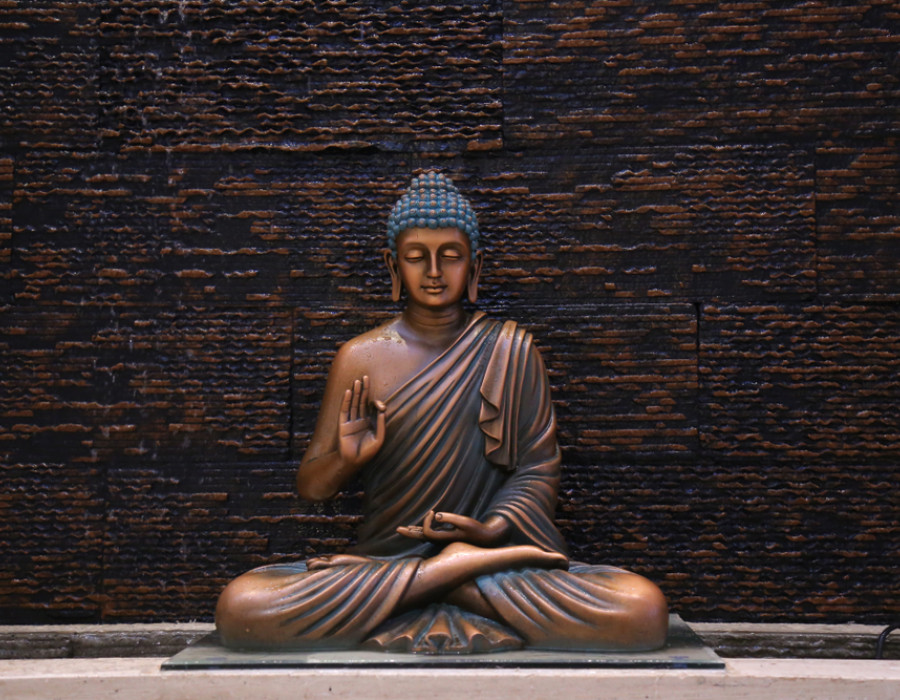
"Better than a thousand useless verses is one word of the Law which brings the hearer peace." - Jenny Hall investigates.
 ©
© shutterstock
Better than a thousand useless verses is one word of the Law which brings the hearer peace.
This verse reminds us that it isn’t studying or listening to words that leads to peace. Peace is the absence of the obsession with ‘I’, ‘me’ and ‘mine’. It emerges when we give ourselves wholeheartedly away into each moment. In this context, ‘one word of the Law’ can be seen as the Dharma. The Dharma is reality and includes everything that is constantly coming to be and ceasing to be.
In early summer, flowers, without words, are offering this insight. We walk through a beautiful garden amongst the vibrant colours and scents of the newly opened flowers, without any effort from an ‘I’ or ‘doer’. This unselfconsciousness, however, quickly disappears if we begin to compare the blooms with those in our own garden or search our memory for their Latin names. Name-and-form (nāma-rūpa) is the fourth link in the Twelve-linked Chain of Conditioned Arising. It arises dependently within the chain that begins with ignorance and through which experience comes to be appropriated in terms of ‘I’, ‘me’ and ‘mine’. When we label things and regard them as fixed entities — as ‘mine’, for example — we forget that they are ephemeral.
When we wholeheartedly empty out all such labels and look at a geranium, it is not a static flower. Its leaves in the summer are different from its leaves in the autumn. Its flowers in the summer are different from the buds in the spring. When all preconceptions are emptied out, the choiceless awareness of Buddha-nature is seen manifesting as the plant. The ‘special transmission outside the scriptures’ — a line from a verse ascribed to the First Zen Patriarch, Bodhidharma — is revealed, from the heart of the plant to the heart of the one who sees it.
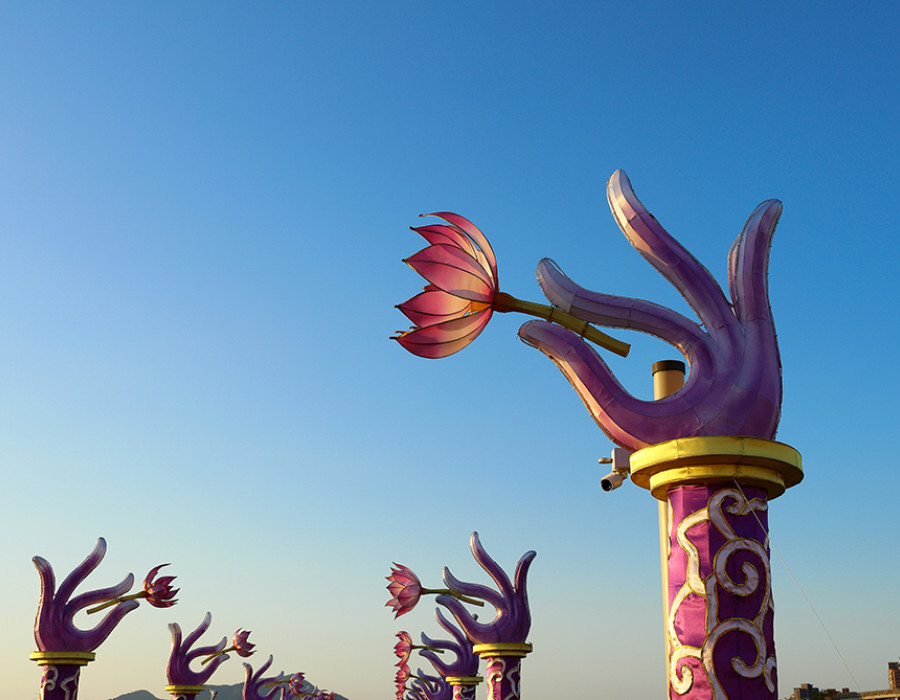
This is expressed in the following story. The Buddha preached many of his sermons on Vulture Peak. One day, Brahmā offered the Buddha a golden flower and asked him to deliver a sermon. The Buddha sat and silently held up the flower. This was the Buddha’s sermon. His followers waited in anticipation for the Buddha to speak, but he remained silent. They were puzzled. They didn’t understand what was going on. However, Mahākāśyapa gave himself wholeheartedly into looking at the flower. He cast out all thought. He didn’t ask himself why the Buddha was silent. He didn’t start thinking, ‘How lovely the flower is.’ He became ‘one’ with the flower. He just smiled.
The Buddha said: ‘I have the Dharma Gate of the Treasure House of the true Dharma eye and now hand it to Mahākāśyapa. Keep it well!’
In that moment, ‘one word of the Law’ was the flower that the Buddha lifted. Zen masters would often raise a finger or a fly whisk. We have the opportunity to receive ‘the true Dharma eye’ in every moment. That is why our Zen teachers encourage us to give ourselves wholeheartedly into daily-life practice. Everything is helping us. It may be the dishcloth, the telephone or the cigarette end waiting to be picked up.
Last year, a group of people carrying white flowers joined a peace walk in the heart of London. Nobody carried placards. Nobody shouted slogans. Nobody made speeches. Nobody protested against anybody or anything. There was just silent walking, holding the flowers. This was an expression of the peace and compassion of the Buddha.
There was once a professor who had an insatiable appetite for philosophy and metaphysics. His study was lined with hundreds of books. One day, a strange wooden box was delivered to his door. It was covered with faded esoteric symbols. Inside was a bundle of crumbling ancient manuscripts covered with cryptic writing. The professor was extremely excited. He believed they contained the very secret of life. He became obsessed with deciphering their hidden meaning.
Days turned into weeks. He worked far into the night. He hardly ate anything. He neglected his colleagues. He never left the house. He was totally immersed in the texts.
One day, his friend knocked at the door. She was shocked to see him looking so tired and ill. ‘Where have you been?’ she asked. ‘What on earth are you doing?’
The professor barely looked at her. ‘I believe these writings hold the key to the meaning of life. I must go on!’
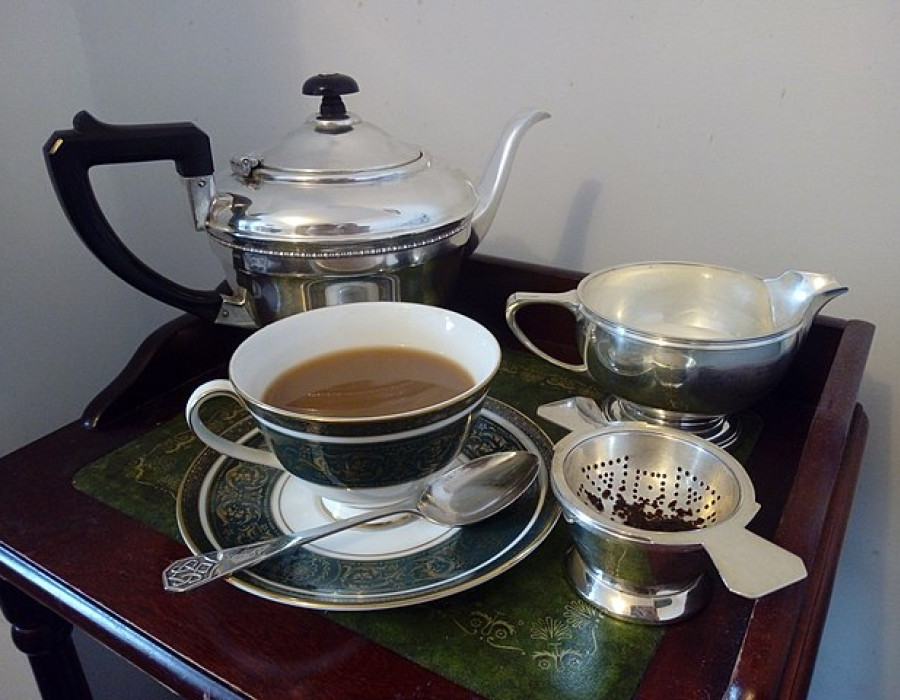
His friend made a cup of tea and placed it on the cluttered desk. ‘I admire your enthusiasm, but isn’t this quest leading you away from the truths that are immediate and within our grasp?’
The professor, however, ignored her. The cup of tea went cold.
Weeks turned into months, and the friend became very concerned about the professor’s obsession. One stormy night, she visited again. Holding an umbrella to shield herself from the leaking roof, she said, ‘Enough is enough. You are making yourself ill. You have forgotten the simple pleasures of life discovered in each moment.’
With aching eyes and head, the professor, for the first time, felt the burden of his efforts. He placed the manuscript in his hand on the desk.
His friend said, ‘Let’s go outside and watch the rain.’
Leaning heavily on her, the professor allowed her to guide him outside. How fragrant were the flowers in the garden! How refreshing was the cool rain on his aching head!
In such at-one-ment lies serenity.
As Tanemura wrote,
A single petal
Of the cherry blossom fell
Mountain Silence.


































 Now reading


