
Jenny Hall
Verses from the Dhammapada 373
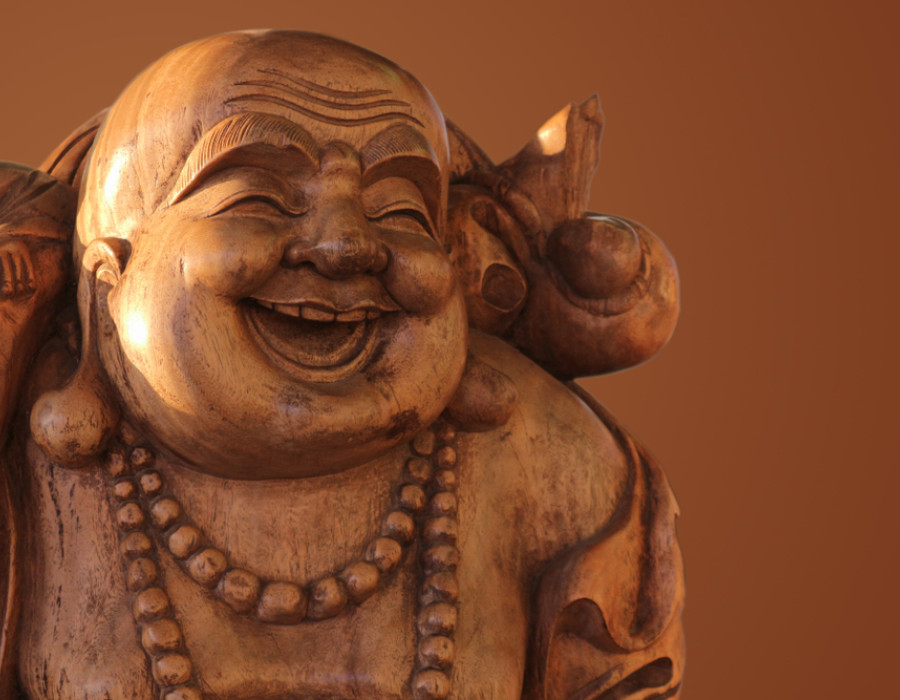
Rather than trying to create a joyful heart, Buddhist practice uncovers a natural joyfulness that is ever present.
 ©
© shutterstock
“The bhikkhu is happy who quiets his mind…”
This verse points to the sympathetic joy that arises from the serenity of the open heart.
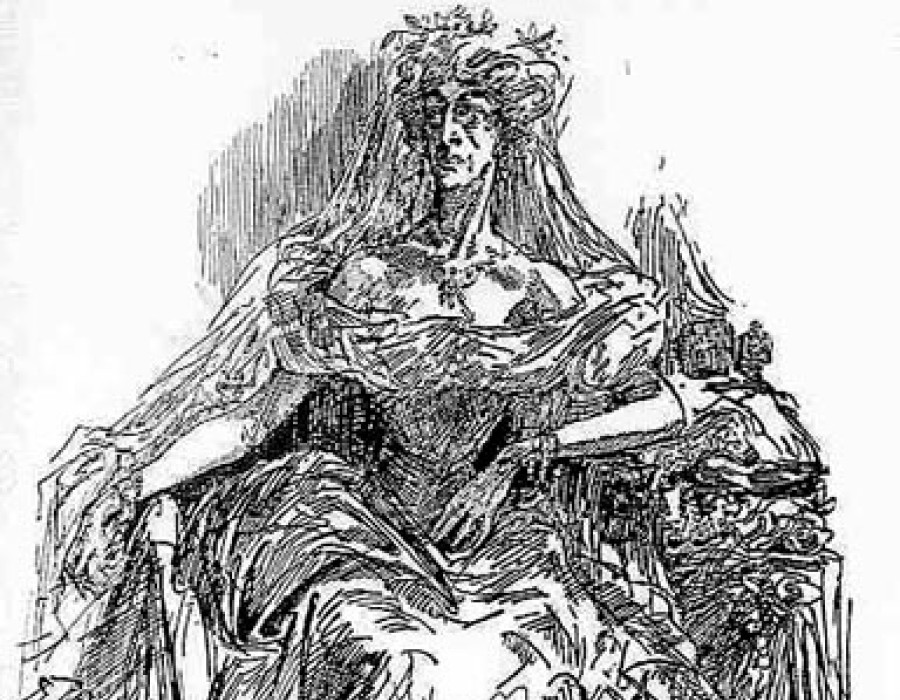
The season of peace and joy has been and gone. In Charles Dickens’s classic story, A Christmas Carol, the main character Scrooge is portrayed as a miserable miser. Despite his wealth, he is very tight-fisted. He refuses to give anything to anyone. His clerk, Bob Cratchit, has only a candle for warmth. Scrooge’s expression is surly. He never smiles. He rarely communicates with family or neighbours. When he does speak, his voice is gruff and grating. It is not surprising that people tend to avoid him.
One Christmas Eve, two gentlemen knock on Scrooge’s door. They ask him if he would like to make a donation on behalf of the destitute. However, they are given short shrift. Scrooge’s nephew is the next to arrive. He invites his uncle to join the family for Christmas Day lunch, remarking that Christmas is an opportunity to freely open the ‘shut-up heart’. To no avail, and Scrooge rudely exclaims,”Bah! Humbug!”
During the night, Scrooge is subjected to a series of terrifying experiences. He is visited by the ghost of his long-dead partner, Jacob Marley. Jacob warns him that he will be haunted by three spirits: the Ghost of Christmas Past, the Ghost of Christmas Present, and the Ghost of Christmas Yet to Come. The spirits take Scrooge back to scenes of his childhood and to the house of poverty-stricken Bob Cratchit and his little crippled son, Tiny Tim. The third ghost reveals the loneliness and sorrow that await Scrooge if he continues to remain closed to the suffering surrounding him. Having met the fear and horror of these visions, Scrooge awakes on Christmas morning a humbled man. Fear is transformed into warmth and happiness. He finds himself smiling and laughing. Filled with compassion, he sends a turkey to the Cratchit family and substantially increases Bob’s salary. He gives a generous donation to the gentlemen collecting for the poor. He joins in his nephew’s party. There are shared food and drink and dancing. Scrooge no longer mutters, “Bah! Humbug!” He realises that such pursuits are expressions of love and mutual support. He regards everything and everyone with a delighted smile. As Dickens wrote, “His own heart laughed”.
The Buddha was once approached by an old woman who, unlike Scrooge, possessed neither money nor property. She asked the Buddha if it would be possible for her to be generous. He reassured her that there were seven acts of generosity that even the poor could perform.
The first action: doing everything wholeheartedly, which leads to the other six. It is the basis of the Six Paramitas. The word ‘Paramita’ is usually translated as ‘Perfection’. It does not mean perfection of oneself, but ‘a going beyond self’. This involves a complete emptying out of ‘me’. A wholehearted giving of oneself into daily life practice and zazen is the heart of the Zen path. It also involves a wholehearted suffering of the churning emotional energy until it is transmuted into the Divine Abodes (goodwill, compassion, sympathetic joy and serenity). The Divine Abodes are naturally expressed in the next three actions:
1. Smiling with a gentle face.
2. Looking with gentle eyes.
3. Speaking with kind words.
A very young child, free from self-consciousness, smiles spontaneously. As we mature, we often become distracted by our own concerns. Smiling often becomes a polite response. The corners of the mouth may lift, but the eyes remain dull. The writer Anita Brookner once referred to such a smile as ‘modified with age’. When we are preoccupied, the natural radiant smile becomes a cold, anxious expression. We are locked up inside ourselves.
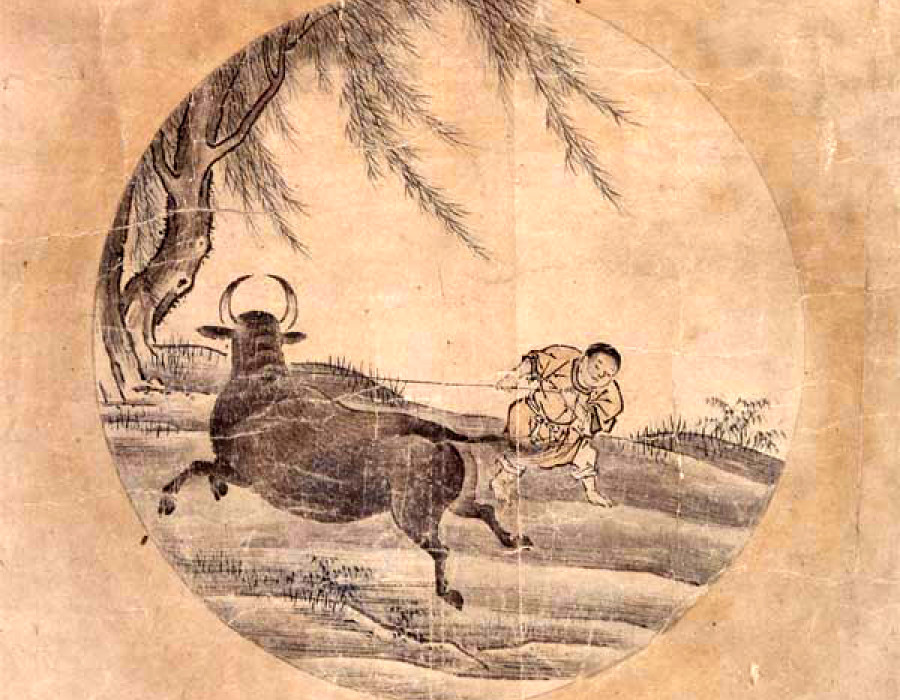
We are only released when wholeheartedly given away. The last picture in the series of Ten Bull Pictures shows one who lives in such freedom. He is smiling, and the verse says that, “a mighty laugh spreads from cheek to cheek. “Everything and everyone around him blossom”.
The first time I travelled up to London to attend a Zen Sunday at The Buddhist Society, I noticed an elderly gentleman at the station whose smile lit up a grey winter’s morning. He had been walking the Zen path for many years and was also going to the meeting. We became friends. It was his smile that encouraged me to embark on the Zen Way.
The fifth action, the Buddha taught, is engaging fully in the world with both body and mind. When we are emptied out, we become one with everything as it comes to be and ceases to be. As we leave our house, we are in communion with the flowers in the front garden, the crisp packet on the path, and the neighbour who has just moved into our Close. We see them clearly.
If needed, help is given. We deadhead a flower. We put the water bottle in the recycling bin. We wave and smile at the new neighbour. Choiceless awareness offers a restful sanctuary to those in distress. When the open heart listens quietly to a friend’s problem, or comes to the aid of an elderly person struggling with a heavy shopping bag, suffering is relieved.
In the Imperial War Museum, there is a photograph of my father providing respite from the horrors of combat during the Second World War. A circle of relaxed, laughing comrades are sitting in the Libyan desert while my father tells jokes and sings songs. A young boy was recently asked why he enjoyed singing in a choir. He replied that he liked to make people smile. When asked why people smiled when he sang, he said, “Because I smile”.















































 Now reading


