Hakuin's Song of Zazen | with commentary by Michael Haggiag
Hakuin Ekaku, one of the most influential Rinzai Zen teachers, encapsulates Zen's most profound insights in just a few lines of poetry.

All beings by nature are Buddha,
As ice by nature is water.
Apart from water there is no ice;
Apart from beings, no Buddha.
How sad that people ignore the near
And search for truth afar:
Like someone in the midst of water
Crying out in thirst,
Like a child of a wealthy home
Wandering among the poor.
Lost on dark paths of ignorance,
We wander through the Six Worlds,
From dark path to dark path-
When shall we be freed from birth and death?
Oh, the zazen of the Mahayana!
To this the highest praise!
Devotion, repentance, training,
The many paramitas--
All have their source in zazen.
Those who try zazen even once
Wipe away beginning-less crimes.
Where are all the dark paths then?
The Pure Land itself is near.
Those who hear this truth even once
And listen with a grateful heart,
Treasuring it, revering it,
Gain blessings without end.
Much more, those who turn about
And bear witness to self-nature,
Self-nature that is no-nature,
Go far beyond mere doctrine.
Here effect and cause are the same,
The Way is neither two nor three.
With form that is no-form,
Going and coming, we are never astray,
With thought that is no-thought,
Singing and dancing are the voice of the Law.
Boundless and free is the sky of Samádhi!
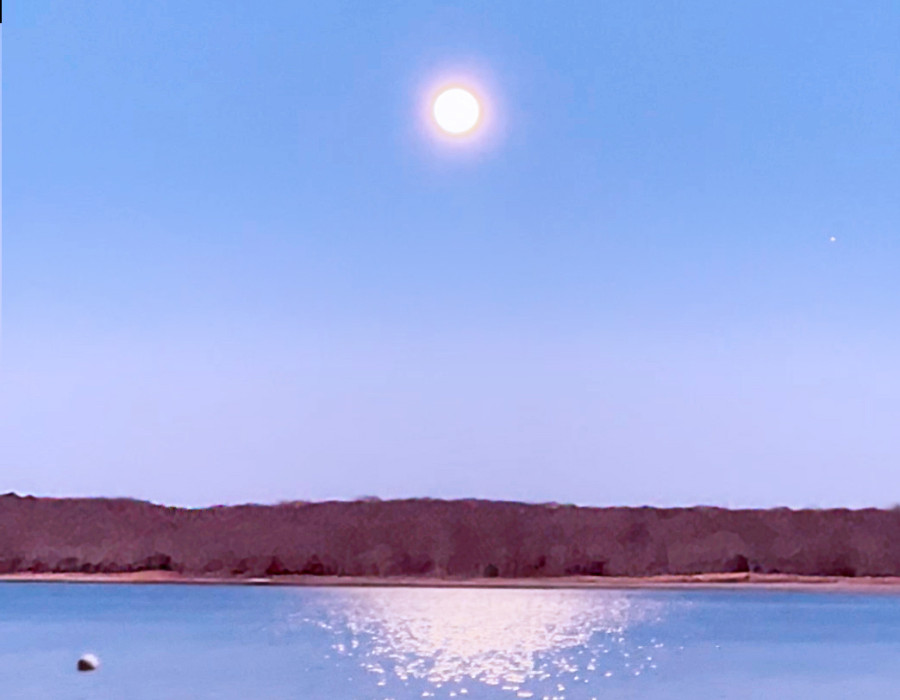
Bright the full moon of wisdom!
Truly, is anything missing now?
Nirvana is right here, before our eyes,
This very place is the Lotus Land,
This very body, the Buddha
(Hakuin Ekaku 1685 - 1768 Translated by Norman Waddell)
Hakuin Ekaku is one of the most influential figures in Buddhism of the last several hundred years. An accomplished poet, painter and calligrapher as well as Zen master, he helped not only to revive the Rinzai Zen school in Japan but also extended its popularity and impact beyond the educated classes to the general population. Hakuin’s Song of Zazen, his most famous poem, manages to synthesize the whole of his teachings in a few striking verses of exceptional clarity and power.
The Six Worlds, also known as the Six Realms, referred to in the third stanza are represented on the Buddhist Wheel of Life as the God-like, Demi-god, Human,
Animal, Hungry Ghost, and Hell realms. Each one is dominated by a ruling passion, the Human by craving or desire. Buddhism teaches that only from the human realm is liberation possible.
Norman Waddell (b.1940) has published many books on Zen Buddhism and is regarded as one of the finest contemporary translators of Buddhist texts and poetry.
He taught at Otani University in Kyoto, Japan, and was editor of the Eastern Buddhist Journal for several decades. He is also one the leading experts on Master Hakuin, having translated his autobiography Wild Ivy and several collections of his Zen teachings. In his translation of Hakuin’s Song of Zazen he emphasizes the forceful, almost blunt quality of the poet’s verse, and captures his distinctive style. The original translation has been broken up into stanzas for ease of reading.