
Between Flowers and Weeds
From personal loss to shared humanity, the wisdom of Dogen’s Genjōkōan.
Having an empty heart doesn't mean we no longer feel anything. Martin explores what emptiness in Buddhism really is and how to walk the middle way.
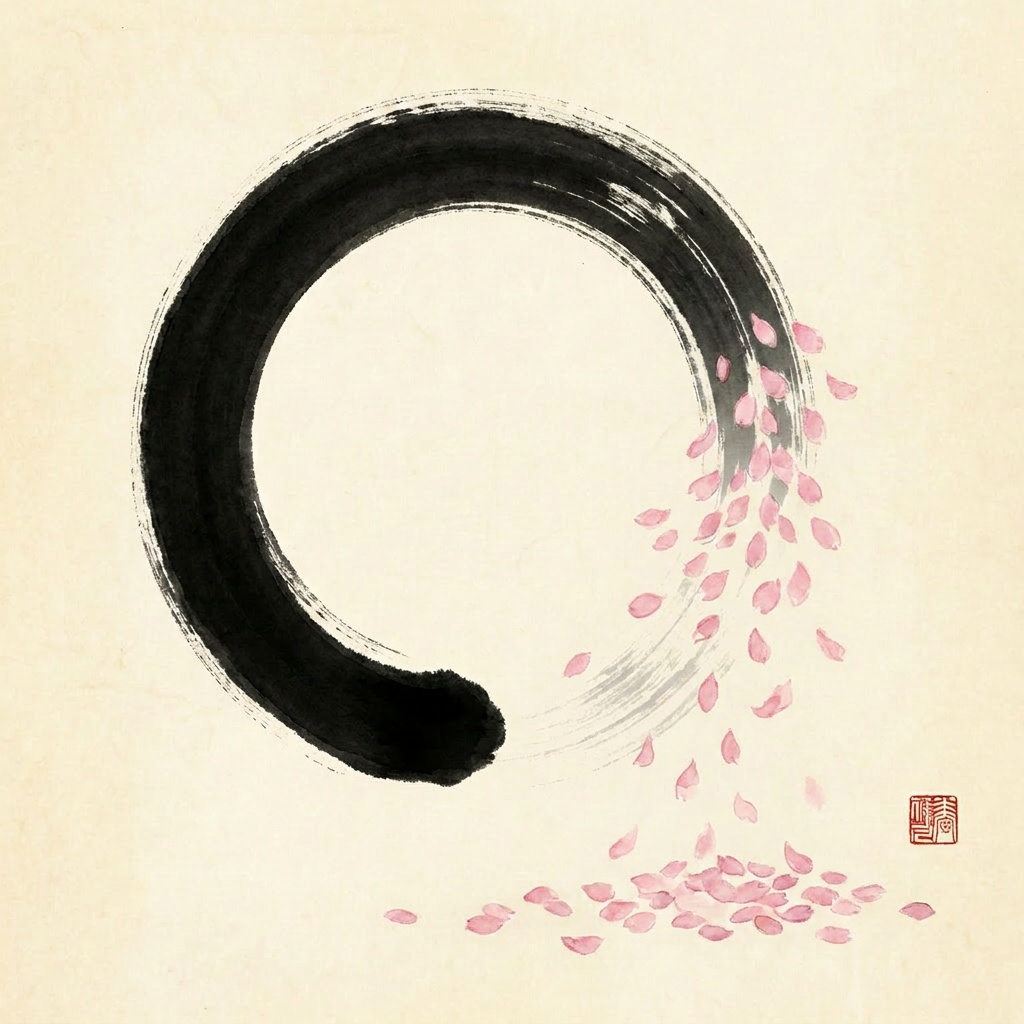
Flowers fall though we love them,
Weeds grow though we hate them.
This is just how it is. (Genjōkōan - Dogen Zenji)
On the surface there doesn’t seem much to this verse from Master Dogen (1200-1253 C.E.).
It is our common experience to love and hate things even to the extent that ‘I’ will define myself as such. If one person asks another to say something about themselves, the other might start by giving a few facts about where and when they were born, live and work. Their definitions can quickly move into more personal details such as likes and dislikes. “I like to ski, walk and exercise, I don’t like to sit and read or watch TV.”! I drink tea but don’t like coffee” etc. These kinds of statements are often given with the same factual voice as where and when I was born, as immutable facts about me. That person might also tell you a few stories from their life, some of which are wonderful, others where they had to suffer loss, betrayal or unfairness. These are the ‘flowers’ and ‘weeds’ in Dogen’s verse and we don’t need him to remind us that our lives are made up of just these things.
When we hear the last line of this verse, “This is just how it is”, it can sound like the kind of statement that's delivered with a feeling of resignation and a shrug of the shoulders. Perhaps you have told a friend about a terrible experience that knocked you sideways and maybe even changed your life. The other person after listening in silence simply responds with a small sigh saying, “Well, it was probably meant to be, you had better just get on with it.” Would we not be doubly hurt and perhaps perplexed by our friend’s apparent lack of empathy and warmth? But Master Dōgen was a great Zen master and being the good Bodhisattva, he would always be aware of the need to extend a hand of compassion to those who suffer.
There is a story of a Zen master who was in the habit of taking a walk in the evening around the local village. At one particular house he heard the sound of crying and lamentation from within. Quietly going in, he saw that the head of the household had died and the family had congregated to mourn the loss. The master sat down at the back of the room and also began to weep. Shortly afterwards, one of the family noticed him and who he was. Leaning over he whispered, “I thought as a Zen master you would be above all this sorrow!” The master replied, “It is because I can do this that I am above this sorrow.” This is a curious response when it appears, at least outwardly, that the master is doing exactly the same thing as the other family members. But there is something else going on here that does not immediately show itself outwardly and so we have to look closer at Dogen’s verse.
Master Dogen was no fool and I do not believe that the last line of the verse is about resignation of the weeds and flowers. So, what is the true tone of this verse? My feeling is that this is an example of ‘suffering with’, rather than a dismissal. Dogen can feel the love of the flowers and the hate of the weeds. He speaks of the tragedy of it all, both the highs and the lows, and, having gone through this suffering, of what it’s like to come out the other side with a quiet acceptance of the fact that these are just the ups and downs of life, which is really what a ‘life’ is.
As we saw before, ‘I’ define myself by my unique joys and sufferings. It is true that what happened to me did not happen to you, but the truth here is that the joys and sorrows, the love and hate, the highs and lows, are what ‘my’ human life has in common with the rest of humanity.
In the radical story of Kisa Gotami, the Buddha manages to save a mother who suffered the greatest fear of a mother, that of losing a child. The Buddha tells her that he can bring back her child back to life if Kisa can find a mustard seed from a house in which no one has ever died, which would have been impossible in India at the time. Knocking on every door she can find and asking if anyone had ever died in their house, Kisa came face to face with the larger reality, that she in fact shared a loss with a great many other fellow human beings.
Suffering, when it first happens, has an isolating effect. I am trapped in my bubble of horror and there is a wall between me and others. A wall also appears between me and all that I had previously called ‘my life’, before whatever the initiating incident was that triggered the suffering. I am ‘cut off’ and separate from my own life and the rest of humanity - or at least that is how it feels.
To be clear, this feeling is absolutely real, but it is also a loss of empathy towards the consciousness that connects us with others and with life itself. When we suffer a loss, we are suffering it again and again in a moment-by-moment recreation in the heart because of this loss of empathy. Although this feeling is real, the Buddha was clear that the content of it is a delusion.
What does the Buddha mean by it being a delusion? What he means is that the truth of the matter is obscured by this content of the heart. In the case of Kisa Gotami, her personal loss obscured the truth that she shares this loss with many, many others. The touching part of her story is that the Buddha does not attempt to take away her loss, but instead he re-connects her with her ongoing life. Thus, she avoids the trap of a cyclical repetition in the heart which traps a person into a continual ‘Ground Hog’ day, forever condemned to repeat the suffering in exactly the same way.
Kisa Gotami will suffer her loss but it will evolve and become a part of her being that can connect with others who have also suffered a great loss. Because of this she will become more than she was before; this is the legacy of her loss and quite unintentionally her dead child’s life also shares in this meaning given by the legacy. This is just how it is.
However, there is still more to Dogen’s sparse verse. Now, we must read between his lines. What is going on outside of this continual practice of love of flowers and hate of weeds? Outside of the loving and hating, isn’t there our daily life and the myriad interconnections bringing everything into and out of existence? As it is beautifully rendered in a poem accompanying one of the classic Bull Herding pictures:
“Suddenly a bush warbler trills high in the tree top. The sun shines warm, and in the light breeze the willows on the water’s edge show their new green.”
It lasts a few moments and then the bird flies away or a cloud now covers the warm sun, but we were present for it! And it makes a difference. There is life outside of that loving and hating. We must find it!


